
Trusted by teams building safer onboarding flows
 SOC 2
SOC 2 iBetaSoon

Basic Liveness Was
Built For Yesterday's
Attacks.
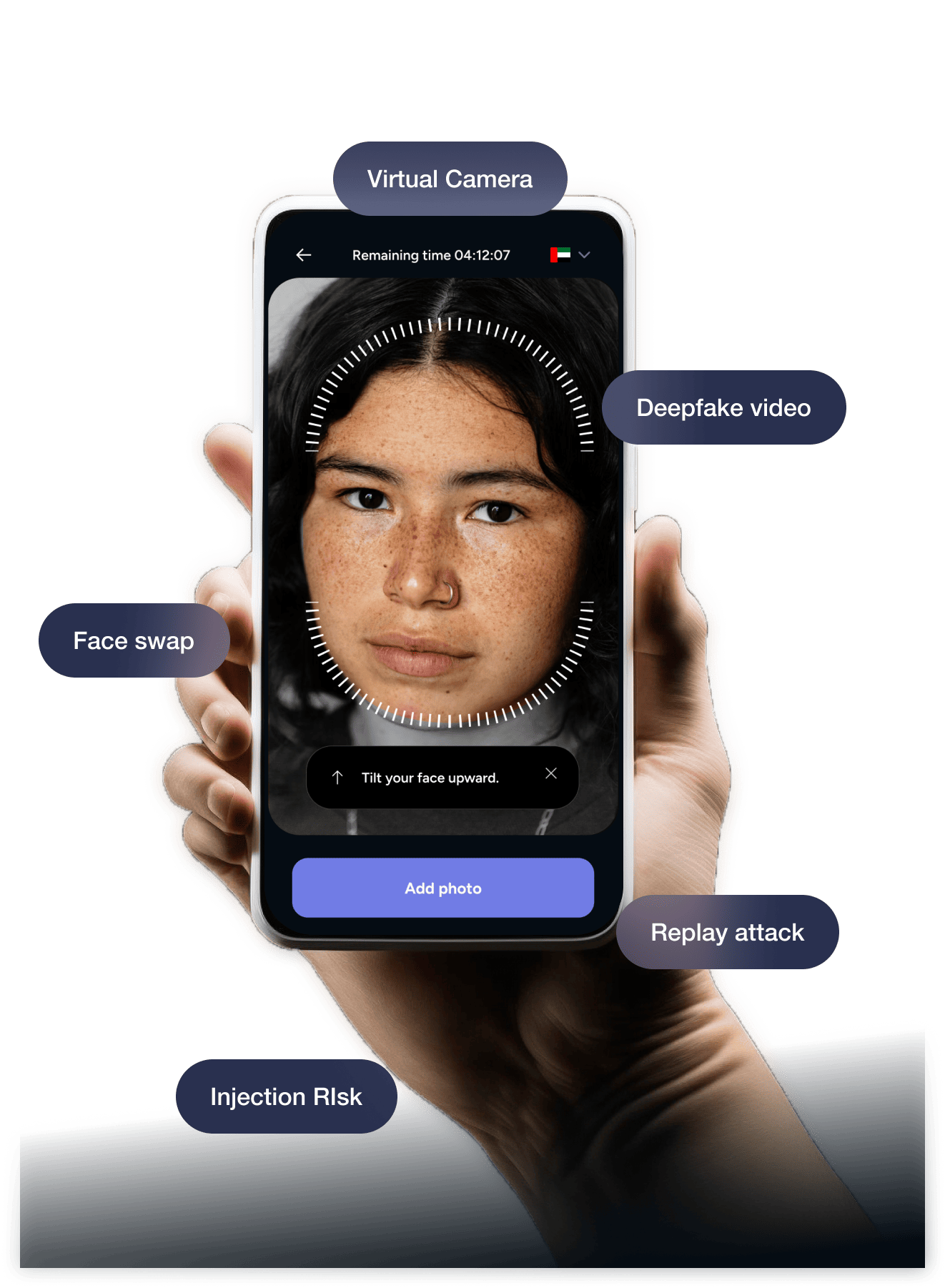
Fraud teams now face manipulated selfie sessions, not just photos and replays. Deloitte reports fintech deepfakes rose sharply in 2023, with AI-enabled U.S. fraud losses projected to reach $40B by 2027.
Deepfakes Can Look Present
Heavy Checks Hurt Good Users
Black-Box Decisions Limit Control
Where DataSpike Liveness Fits
Fintech and Crypto
Stop synthetic users, manipulated selfie videos, and spoofing attempts before account approval.
Marketplaces and gig platforms
Prevent banned-user re-entry and protect trust between participants
Dating and social Platforms
Keep fake profiles, bot farms, and AI-generated users out of the feed.
Proctoring and workforce verification
Confirm that the right person is present during exams, interviews, or sensitive sessions.
One Liveness Step.
Deepfake Defense Built In.
Detect real presence
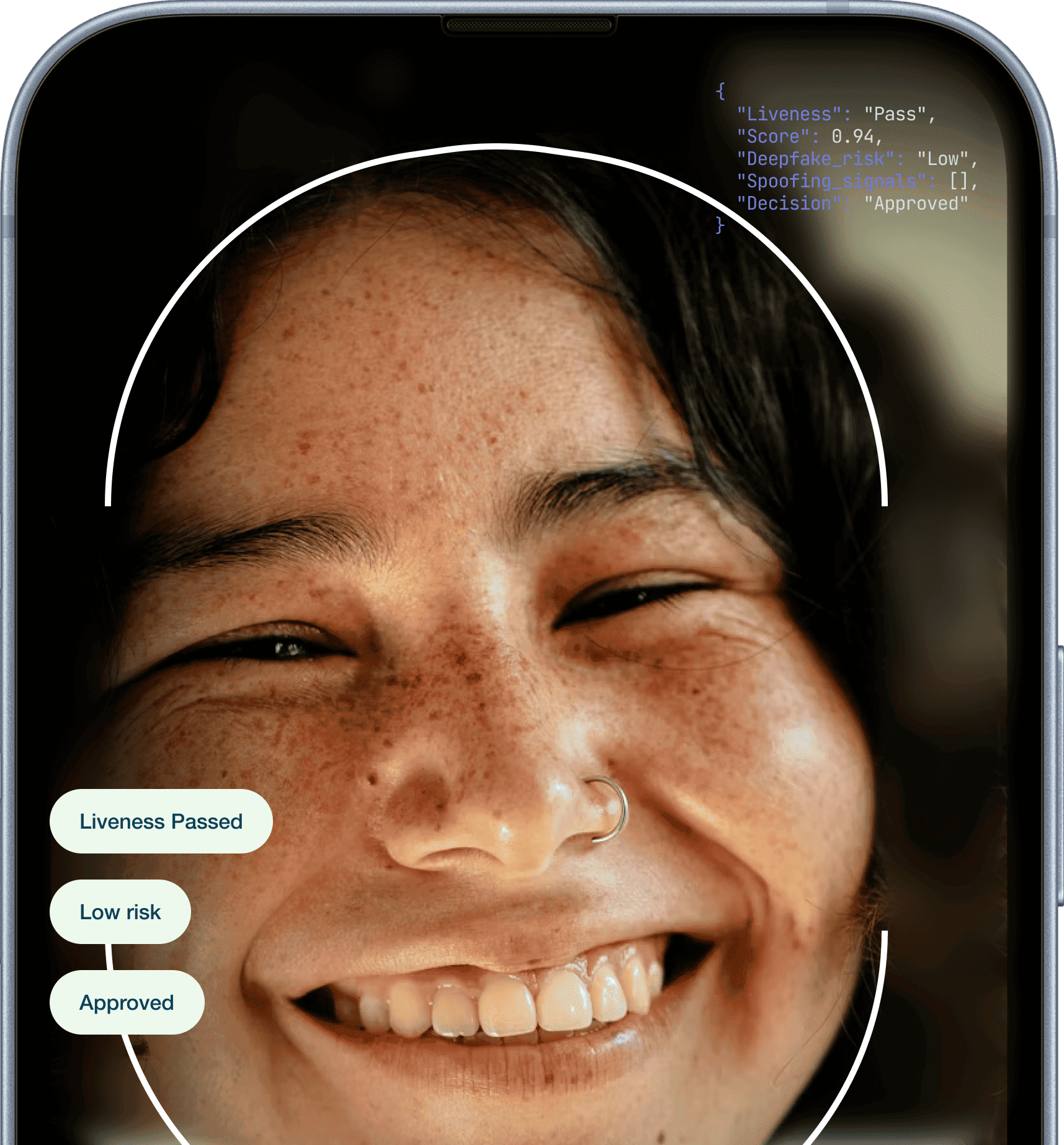
Confirm that the face belongs to a live person in the session, not a static image, replay, mask, or screen recapture.
Catch AI manipulation
Flag deepfake video artifacts, face swaps, virtual-camera signals, and synthetic-media risk.
Tune decisions to your risk
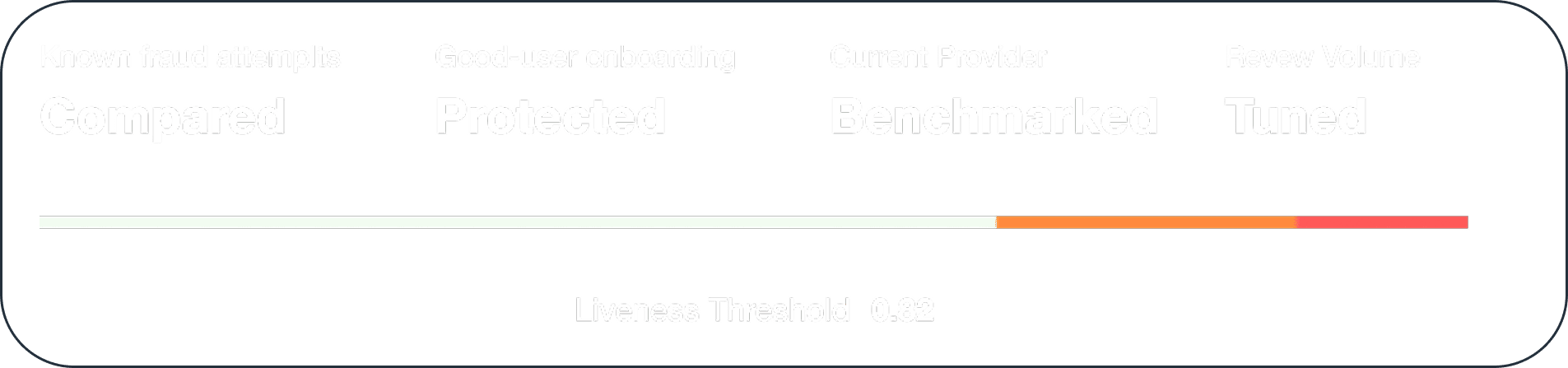
Use scores and thresholds to balance fraud prevention, false positives, manual review, and user conversion.
From Camera Session To Decision-Ready
Risk Signal.
- 01
Capture
Short camera session in onboarding, re-verification, or account recovery.
- 02
Analyze
Check presence, media integrity, capture path, replay patterns, and deepfake risk.
- 03
Decide
Return scores and recommended routing: approve, reject, retry, or review.
- 04
Review Evidence
Inspect metadata and decision history when a case needs review
Fraud signals for modern onboarding threats.
Liveness detection for KYC
Verify live presence during onboarding, re-verification, account recovery, or high-risk actions.
Deepfake and face-swap risk
Identify manipulated selfie videos and synthetic-media patterns before approval.
Replay and recapture detection
Detect attempts using recorded video, screen playback, or reused media.
Virtual camera and injection signals
Flag suspicious capture paths that may not come from a genuine live camera session.
Score-based decisioning
Configure thresholds around fraud risk, conversion, geography, user segment, and review capacity.
Review-ready metadata
Return structured outputs fraud and compliance teams can inspect later.
Explore Docs
API docsReview API references, integration guides, and implementation options for adding liveness to your verification flow.
Start With Testing.
Scale as you grow. No need to replace your current KYC stack. Just add Dataspike Liveness as a focused module or SDK / OEM.
Test on your fraud cases
Benchmark against labeled good-user sessions, failed reviews, suspicious cases, and known fraud.

Test liveness in sandbox, move to pay-per-verification in production, and switch to custom pricing as your volume grows.
Pay as you go

Volume pricing
Get custom pricing for higher verification volumes, advanced deployment needs, or broader KYC and fraud-control bundles.
Talk to salesWhy Dataspike for liveness detection?
What is liveness detection?
Liveness detection checks that a real, live person is physically present during verification, not a photo, video, mask, or deepfake. Unlike a selfie check, it confirms presence at that exact moment, so static spoofs and AI-generated faces don't get through.
How does Dataspike detect deepfakes specifically?
Dataspike detects face swaps, AI-generated faces, and live injection attacks, not just photos or pre-recorded videos. These are the attack types that pass standard liveness checks. Our model is built entirely in-house and updated continuously against new attack vectors.
What's the difference between standard liveness and deepfake detection?
Standard liveness confirms a real person is present, it stops photos, masks, and pre-recorded videos. Deepfake detection catches what liveness misses: AI-generated faces, face swaps, and live injection attacks via virtual cameras. Dataspike runs both checks in one pass, under 2 seconds.
Is it active or passive liveness detection?
Passive. No user action required, no head turns, no blinking, no following instructions. The check runs in the background in under 2 seconds, reducing onboarding friction and improving conversion compared to active liveness methods.
How fast is the check?
Under 2 seconds. It runs in the browser, no app install, no redirects, so it fits cleanly into any onboarding or re-auth flow without hurting conversion.
Can it be used for age verification?
Yes. A one-second liveness check returns an 18+ or 21+ signal with no document upload and no stored PII, built to work with EU, UK, and US age verification requirements.
How do we integrate liveness?
How long does integration take?
Most integrations complete in under a day using the hosted widget, or 2–3 days with the REST API. Full documentation and sandbox access available immediately.
Does it work on desktop, not just mobile?
Yes. iOS, Android, and desktop browsers all work with any standard camera. Same API, same response format regardless of platform.
Does it work alongside my existing KYC provider (e.g. Sumsub or Onfido)?
Yes. Dataspike Liveness is built to augment, not replace. Add deepfake detection as a single API call on top of your existing Sumsub, Onfido, or any KYC integration, no migration, no disruption to your current onboarding flow.
What happens when a check fails?
Users get prompted to retry. Configurable retry limits, failure messages, and escalation rules are available through the dashboard or API.
Compliance & Security
Does Dataspike store face or biometric data?
No. By default, nothing is stored after the check. Stateless mode available, all data is processed in real time and discarded. GDPR-aligned. On-prem deployment available for full data sovereignty.
What certifications does it meet?
ISO/IEC 30107-3 for presentation attack detection. SOC 2 Type II and ISO 27001 in progress.
Is it suitable for regulated industries like finance and iGaming?
Yes. Used in fintech, crypto, and iGaming environments. Supports audit trails, configurable compliance flows, and works alongside document verification, AML, and KYT as part of a full identity stack.
KYT Crypto Feature
Monitor crypto wallets and transactions for risk signals.
Deepfake Detection
Detect manipulated media across image, video, audio, and document inputs.
Compliance Suite
Screen users, monitor risk, and keep review evidence in one workflow.